AI Data Solutions

Custom Multimodal Data Collection for AI Training & Evaluation

Build the exact datasets your AI models need across text, speech, audio, image, video, sensor and real-world interaction data.
From a specific collection requirement to a production-ready dataset, we design and manage end-to-end data programs around your target scenarios, environments, geographies, contributors, edge cases and quality standards—then enrich, validate and deliver the data in the format your AI pipeline requires.

Controlled + in-the-wild capture · Annotation + QAAnnotation + QA Consent + provenance
Documents
Images
Video
Vision stream
object
object
RGB
Depth
Video
Document
OCR98%

Sensor

IMU stream

XYZ

Speech & audio

16 kHz · multi-speaker

Multimodal data collection

Collect the exact multimodal data your AI models need

Build custom datasets across image, video, speech, audio, text, documents, code, sensor and real-world interaction data—designed around your target scenarios, environments, contributors, devices, edge cases and quality requirements.

Physical + embodied AI

Egocentric, Sensor & Physical Interaction Data

Capture synchronized first-person, sensor, wearable and human-object interaction data for robotics, embodied AI, VLA models, navigation systems and models that need to understand real-world actions and environments.

Example data programs
Egocentric task sequences
RGB + depth capture
IMU & wearable telemetry
Hand-object manipulation
Spatial navigation sessions
Haptic & device signals
Teleoperation demonstrations
Task success & failure cases
audio capture
Voice + conversational AI

Speech, Voice & Acoustic Data

Collect diverse speech and audio datasets across languages, accents, speakers, devices, environments, intents, emotions and conversation types for ASR, TTS, voice agents and speech intelligence models.

Example data programs
Scripted & natural speech
Voice commands & wake words
Multi-speaker conversations
Regional accents & dialects
Ambient & environmental audio
Speaker verification samples
Emotional & expressive speech
Contact-center conversations
object 1
object 2
object 3
object 4
Vision + multimodal AI

Image, Video & Visual Understanding Data

Build visual datasets around the exact objects, activities, environments, conditions and edge cases your models need to recognize, track, classify, describe, or reason about.

Example data programs
Vehicle & road scenarios
Damage & defect imagery
Retail & product datasets
Human activity videos
Aerial & drone imagery
Multi-camera sequences
Object & action datasets
Visual reasoning & Q&A
Entity93%
Address89%
Total85%
Due date81%
Language + enterprise AI

Text, Document & Code Data

Create domain-specific text, document and code datasets for language models, document intelligence, retrieval systems, AI agents, reasoning models, extraction pipelines and coding assistants.

Example data programs
Prompt-response datasets
Expert-written Q&A
Invoices & receipts
Forms & business documents
Reasoning & evaluation sets
Entity extraction datasets
Code tasks & solutions
Domain-specific corpora
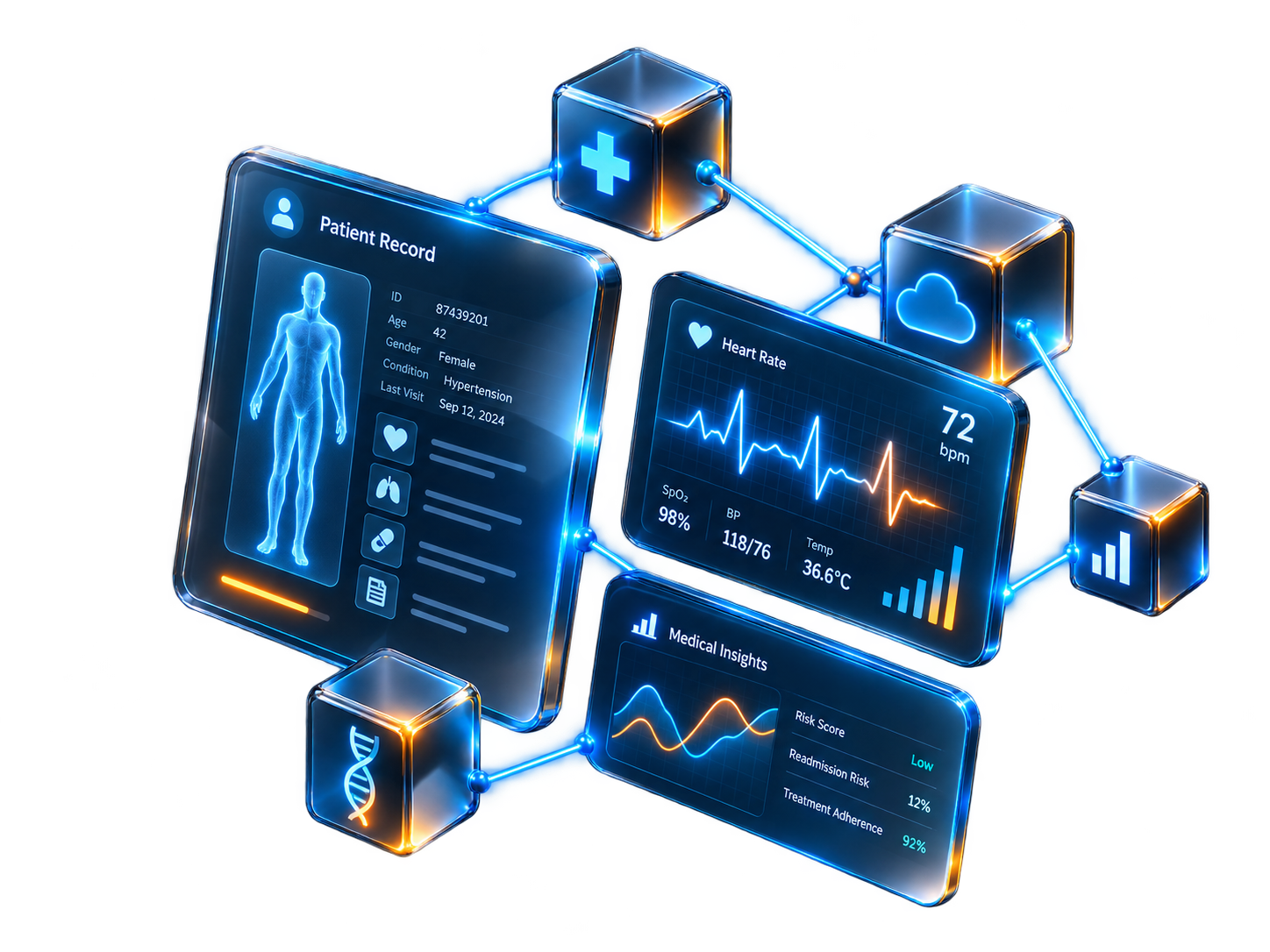
Healthcare AI Data

Build healthcare datasets around your exact AI requirements

From medical imaging and clinical documents to speech, video, biosignals and wearable data, we design healthcare data programs around your target use case, specialty, population, privacy requirements, annotation standards and model objectives.

Multimodal healthcare AI data collection and annotation
01

Define the clinical data requirement

Translate your AI use case into a clear dataset specification covering medical specialties, data modalities, target conditions, contributor profiles, annotation requirements, metadata, privacy controls, quality thresholds and delivery format.

02

Source the right data, experts and environments

Identify approved healthcare data sources, qualified medical professionals, contributors, devices, facilities and capture environments based on the required specialty, geography, modality, patient population and study criteria.

03

Collect multimodal healthcare data

Collect or ingest medical images, clinical documents, physician-patient conversations, medical speech, procedure videos, wearable signals, biosignals, sensor streams and other healthcare data through controlled or real-world workflows.

04

Annotate and validate with healthcare expertise

Apply medical classification, segmentation, entity extraction, transcription, coding, timestamps, clinical attributes and metadata enrichment with structured QA, expert review, adjudication and validation workflows.

05

Deliver secure, model-ready datasets

Receive structured datasets with validated annotations, metadata, stable sample IDs, QA results, provenance records, version history and client-defined schemas prepared for AI training, fine-tuning, evaluation, or validation.

Collection workflow

Turn a specific data requirement into a model-ready dataset

We translate your target scenarios, contributors, environments, volumes, edge cases and quality requirements into a managed collection program—from initial pilot through validated delivery.

01

Turn your requirement into a collection specification

Define exactly what must be collected—including modalities, target scenarios, environments, contributors, devices, geographies, volumes, class distribution, edge cases, metadata, annotations and acceptance criteria.

02

Build the right sourcing and capture plan

Identify the contributors, specialists, locations, devices, equipment and capture environments needed to meet the specification, then establish quotas and protocols for each required data segment.

03

Pilot, validate and scale the collection

Run an initial pilot to verify capture instructions and data quality, then scale through studio, remote, onsite, controlled, or in-the-wild programs while tracking progress against required coverage.

04

Review quality and close dataset gaps

Validate incoming data for completeness, protocol compliance, duplicates, technical quality, metadata accuracy, class balance and edge-case coverage, then recollect or expand segments where requirements are not yet met.

05

Enrich and deliver model-ready data

Apply required labels, transcripts, timestamps, metadata, segmentation, classifications, or other annotations, then deliver accepted assets with manifests, QA results, provenance records and client-defined schemas.

Operational depth

Experience and scale behind every data program

Combine proven AI delivery experience, structured annotation workflows and multidisciplinary technology expertise to support model-ready data programs.

1000+
AI & data initiatives shipped

AI and data initiatives delivered across modern AI, machine learning and data-driven product programs.

98.7%
Label accuracy

Label accuracy highlighted by Srishta for machine-learning training data and annotation workflows.

12.4K
Annotated samples

Annotated training samples showcased across Srishta's machine-learning data workflow.

1000+
Global Brands, Scale-ups, and Start-ups

Organizations across different stages and industries represented in Srishta's global client ecosystem.

50+
Skilled software professionals

Technology professionals supporting software engineering, AI, data and digital product delivery.

11+
Years of innovation

More than eleven years of technology consulting, development and digital transformation experience.

Annotation & data services

Prepare multimodal data for training and evaluation

Transform collected image, video, text, speech and audio data into structured datasets through specialized annotation, labeling, enrichment and quality review workflows.

Image Annotation

Prepare high-quality image datasets with bounding boxes, polygons, segmentation, classification, keypoints, object labeling and other computer vision annotations.

Learn more

Video Annotation

Create structured video training data with frame-level labeling, object tracking, action recognition, event annotation, temporal tagging and visual sequence analysis.

Learn more

Text Annotation

Build NLP-ready datasets through text classification, entity labeling, intent annotation, sentiment analysis, semantic tagging and structured language data preparation.

Learn more

Audio & Speech Annotation

Prepare speech and audio datasets with transcription, speaker identification, diarization, timestamps, pronunciation, emotion, intent and multilingual labeling.

Learn more

Ready-to-use datasets

Accelerate training with ready and custom datasets

Evaluate datasets by modality, task coverage, capture conditions, contributor profile, geography, licensing, provenance, annotation depth and delivery format—or request a custom collection for specific requirements.

VIDEO + SENSOR

Egocentric task video

First-person task sequences with optional IMU, depth, environment context, step boundaries and object interaction metadata.

AUDIO

Multilingual speech packs

Balanced speech across accents, speaking styles, devices, acoustic environments and task types for ASR, TTS and voice agents.

TEXT + DOCUMENT

Document intelligence corpora

Structured enterprise documents, extraction targets, Q&A, reasoning tasks, metadata and evaluation sets for document AI systems.

Dataset delivery

Know exactly what is included in every delivery

Receive structured data with the metadata, annotations, quality records, provenance references and delivery formats required for downstream training and evaluation.

Raw + normalized assets

Original media plus normalized derivatives, consistent naming, checksums, manifests and split definitions.

Annotation + metadata

Labels, transcripts, timestamps, task states, contributor attributes, device metadata and confidence fields.

QA + acceptance evidence

Validation reports, rejection reasons, review history, inter-rater checks, exceptions and final acceptance summaries.

Pipeline-ready schemas

JSONL, CSV, Parquet, XML, media manifests, custom schemas, or client-defined packaging conventions.

Delivery manifest

Keep every sample traceable from collection to training.

Each delivery can include stable sample IDs, split assignments, capture metadata, annotation versions, QA outcomes, provenance references, consent records and exception notes.

{
  "sample_id": "session_0042_clip_017",
  "modalities": ["video", "audio", "imu"],
  "capture": { "device": "configured-device-id", "locale": "en-IN" },
  "task": { "name": "object-placement", "step": 4 },
  "labels": { "action": "place", "objects": ["container"] },
  "quality": { "status": "accepted", "review_version": "v3" },
  "provenance": { "consent_ref": "consent_0042", "license": "client-defined" }
}

Data governance

Consent, provenance and usage rights built into the workflow

Governance controls cover contributor sourcing, consent, usage rights, data handling, review, storage and delivery so every dataset has a clear record of origin and permitted use.

Consent by design

Capture consent scope, allowed uses, retention requirements, withdrawal handling and contributor records as part of the dataset—not as an afterthought.

Provenance and auditability

Track where data came from, who created it, how it was processed, which QA steps it passed and which version entered production.

PII-aware workflows

Use de-identification, redaction, access controls, secure work environments and policy-specific handling for sensitive collection programs.

Rights and licensing clarity

Document contributor rights, asset permissions, licensing boundaries, downstream usage terms and restrictions in delivery metadata.

Plan your data collection

Build the data your model needs next

Tell us what you are building, the data modalities you need, target markets, expected volume, quality requirements and delivery timeline. We will help shape a collection program around your requirements.

Collection scope & pilot design
Contributor & capture strategy
Quality, consent & governance
Delivery format & scale-up plan

Tell Us About Your Project

0/1500

FAQ

Questions technical buyers ask before a pilot

Keep answers concrete: what gets collected, how quality is measured, how sensitive data is governed, what gets delivered and how the program scales.

A multimodal program collects or creates two or more data types—such as text, audio, images, video, documents, depth, IMU, or interaction traces—and aligns them so the model can learn relationships across modalities.

Yes. A strong design can use controlled capture for precision, remote collection for geographic reach and natural-environment capture for behavioral diversity. The important part is keeping protocol, metadata, QA and consent consistent across environments.

Quality should be specified as measurable acceptance criteria: capture completeness, device settings, SNR or image quality thresholds, annotation agreement, metadata coverage, class balance, schema validity and allowed exception rates.

A production-ready delivery should include manifests, schemas, annotations, contributor and device metadata where permitted, provenance, QA results, split definitions, rejection logs, version information and secure transfer documentation.

Programs should start with explicit consent and purpose limits, then add access controls, retention rules, privacy reviews, de-identification where appropriate, auditable processing and client-specific security requirements.

Synthetic data is useful when real-world examples are scarce, expensive, unsafe, privacy-sensitive, or insufficient for edge-case coverage. It should be validated against the target distribution and used with clear provenance rather than treated as a drop-in substitute for all real data.

Use ready data when you need broad coverage quickly and your task tolerates an existing schema. Use custom collection when device, geography, participant profile, environment, taxonomy, edge cases, or licensing conditions are model-specific. Hybrid programs are often effective.

Version the taxonomy and schema, preserve provenance, log model failure modes, maintain an exception queue and treat collection as an iterative program. New rounds can target the gaps revealed by evaluation instead of repeating the original distribution.